
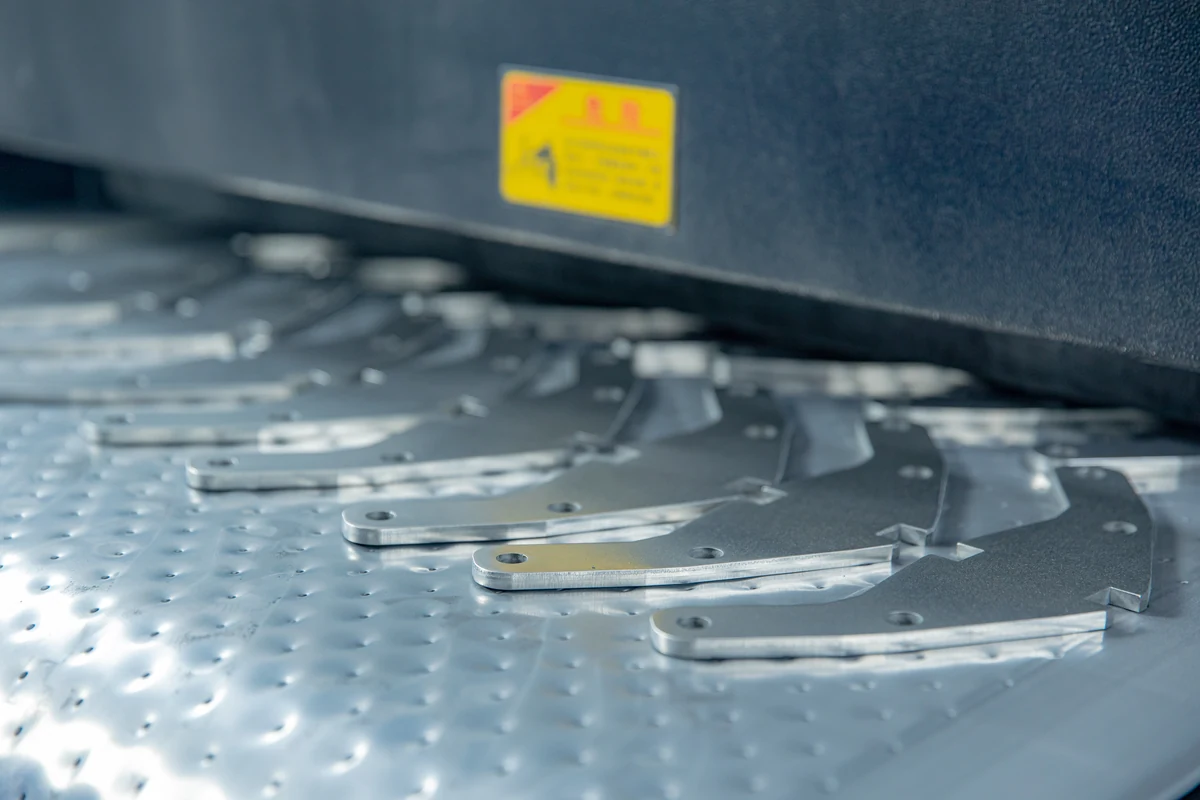
- Key Takeaways
- What Is Sheet Metal Fabrication?
- The Sheet Metal Fabrication Process
- Types of Sheet Metal Fabrication
- Metal Materials Used for Sheet Metal Fabrication
- Tools and Equipment Used in Sheet Metal Fabrication
- Design Considerations That Keep Parts Affordable
- Advantages and Limitations of Sheet Metal Fabrication
- Sheet Metal Fabrication Compared With Other Methods
- Surface Finishing and Post-Processing
- What Drives the Cost of Sheet Metal Fabrication
- Where Sheet Metal Fabrication Shows Up
- FAQ
Sheet metal fabrication is the process of using flat metal sheets to create finished parts and structures. The material goes through a few stages until it matches what the drawing calls for.
Steel, aluminum, stainless, titanium, plenty of metals begin as a simple sheet and end up as a bracket, an enclosure, a chassis panel, or a complete assembly. Look around, and you'll find it almost everywhere, from the car on your drive to the server cabinet humming away in an office.
This guide covers what sheet metal fabrication involves, the main types you'll come across, the materials and tools in play, and the places it gets used. Plenty of businesses hand this work to sheet metal fabrication services rather than run it in house, so knowing the basics helps you brief a supplier well.
KEY TAKEAWAYS: PLATFORM DASHBOARD CARDKey Takeaways
Sheet metal fabrication takes a flat metal sheet - usually thin, from under a millimeter up to about 6 mm - and turns it into a finished part through four stages: cutting, forming, joining, and finishing.
The techniques fall into three families: cutting (laser, waterjet, plasma, punching), forming (air bending, bottoming, coining), and joining (welding, riveting, adhesives).
Your metal choice drives both performance and price - carbon steel for strength on a budget, galvanized for basic corrosion protection, stainless for wet or outdoor conditions, aluminum when weight matters.
Most parts need no dedicated tooling, which keeps upfront costs low and suits anything from a one-off prototype to a high-volume run.
The final price comes down to four levers: material and thickness, design complexity, the processes involved, and how many you order.
Table of Contents
- What Is Sheet Metal Fabrication?
- The Sheet Metal Fabrication Process From Sheet to Finished Part
- Types of Sheet Metal Fabrication
- Metal Materials Used for Sheet Metal Fabrication
- Tools and Equipment Used in Sheet Metal Fabrication
- Design Considerations That Keep Parts Affordable
- Advantages and Limitations of Sheet Metal Fabrication
- Sheet Metal Fabrication Compared With Other Methods
- Surface Finishing and Post-Processing
- What Drives the Cost of Sheet Metal Fabrication
- Where Sheet Metal Fabrication Shows Up
- Frequently Asked Questions
What Is Sheet Metal Fabrication?
Strip it back, and sheet metal fabrication takes a flat piece of metal and works it into a three-dimensional part with a defined shape and job to do. The raw material shows up as a coil or a cut sheet, usually anywhere from a fraction of a millimeter up to around 6mm thick, and walks out the door as something functional.
Three broad stages sit at the core.
- The metal gets cut to size or profile.
- It then gets formed, which means bent or pressed into shape.
- Finally, the separate pieces get joined into one unit.
A finishing step often rounds things off, either to guard the surface or sharpen how it looks.
The reason so many industries reach for it comes down to value. One flat sheet, handled well, gives you a part that stays strong while keeping its weight low, and quite often with no dedicated tooling required. That keeps the upfront spend modest and shrinks the gap between a finished design and a delivered part.
The Sheet Metal Fabrication Process From Sheet to Finished Part
The sheet metal fabrication process follows a sensible order, and each stage sets up the next.
- Cutting kicks things off.The sheet gets cut down to its final outline. Sometimes that is a plain rectangle. Other times it is a detailed profile packed with holes and slots. Which cutting method a fabricator reaches for depends on the metal, how thick it is, and how tight the tolerances have to be.
- Forming comes next.The flat blank earns its shape here, most often on a press brake that presses angles, flanges, and folds into the metal. Curves and channels appear at this point too.
- Joining pulls the parts together.Welding, riveting, or bonding takes a set of formed pieces and makes them one assembly.
Finishing completes the part. A coat of powder, a layer of plating, paint or a polish protects the metal and settles its final appearance.
Types of Sheet Metal Fabrication
Once you get into the detail, the types of sheet metal fabrication group neatly into cutting, forming and joining. Each family holds a few methods, and a fabricator mixes them to suit the part. Here are the sheet metal fabrication techniques that come up most.
Cutting Techniques
IMAGE ROW: CUTTING TECHNIQUES - IMAGE LEFT / TEXT RIGHT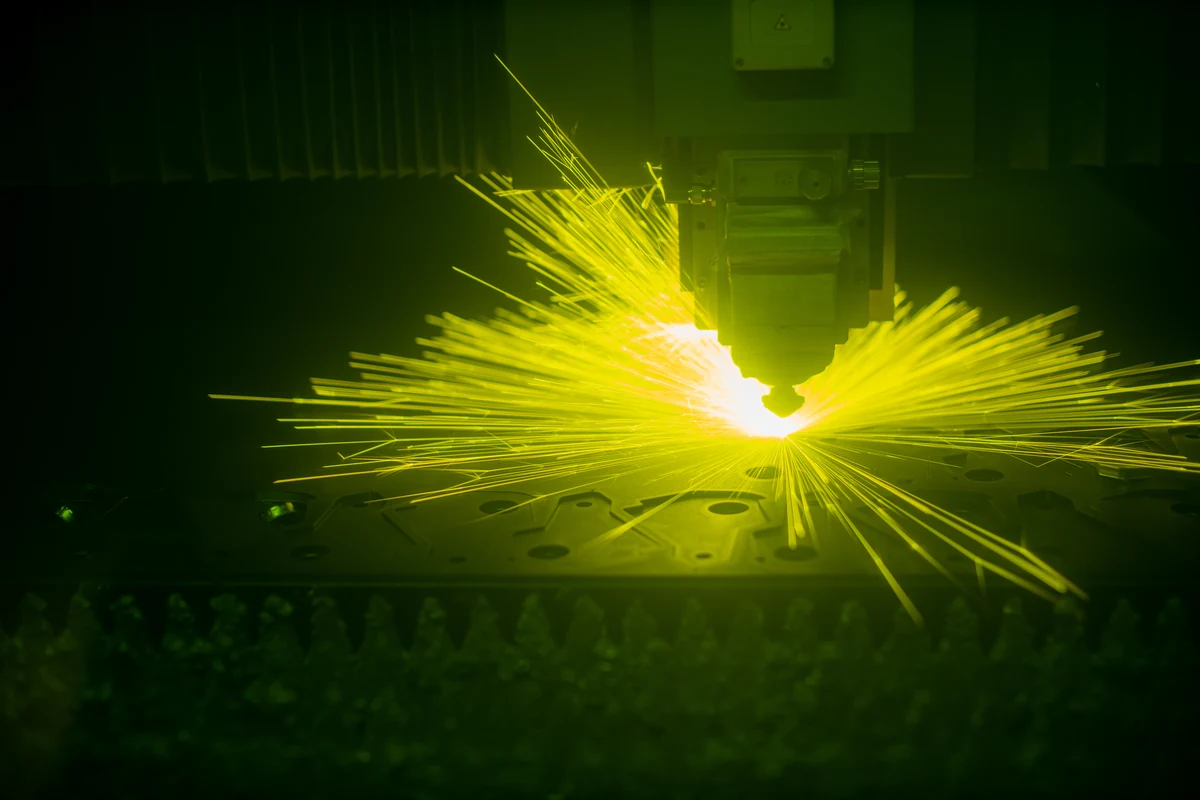
Cutting shrinks a large sheet into workable pieces or exact shapes.
- Laser cuttinghandles tight, clean outlines and moves quickly through thinner stock.
- Waterjet cuttingstays cold as it works, so it handles heat sensitive metals that a torch would warp.
- Plasmacopes with thicker plate and a broad range of conductive metals.
- Then there'spunching. It drives out holes, slots and repeat patterns fast, and it pays off on big production runs and on parts that need vents or fastener points.
Forming and Bending
IMAGE ROW: FORMING AND BENDING - TEXT LEFT / IMAGE RIGHTForming gives the flat sheet its geometry.
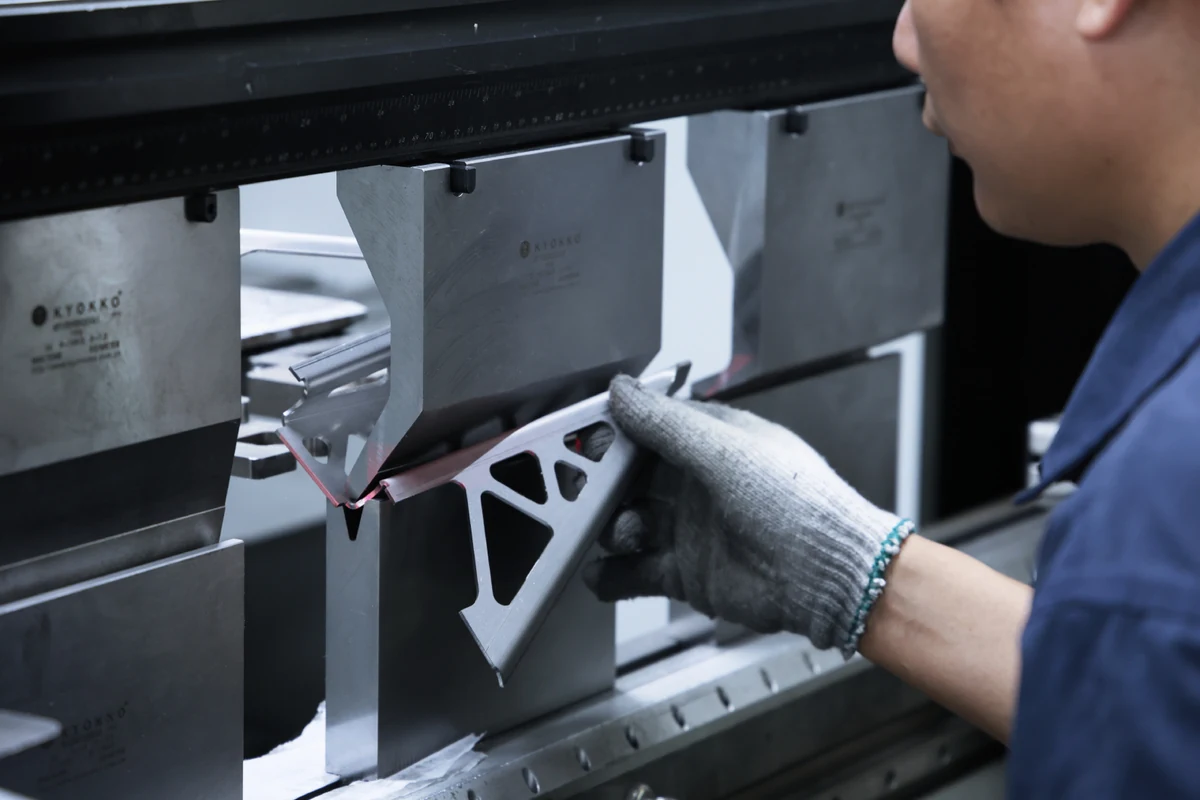
- CNC bendingdoes most of that work, pressing the metal to set angles with a punch and die.
- Air bendingpresses the sheet only partway into the die opening, so the sheet never touches the die floor, which gives you flexible control over the angle from a single tool set.
- Bottomingpresses the sheet firmly against the die cavity for consistent, repeatable angles.
- Coiningpushes hard enough to set very sharp, tightly held bends, handy for detailed shapes that need to hold their form.
Joining Methods
IMAGE ROW: JOINING METHODS - IMAGE LEFT / TEXT RIGHT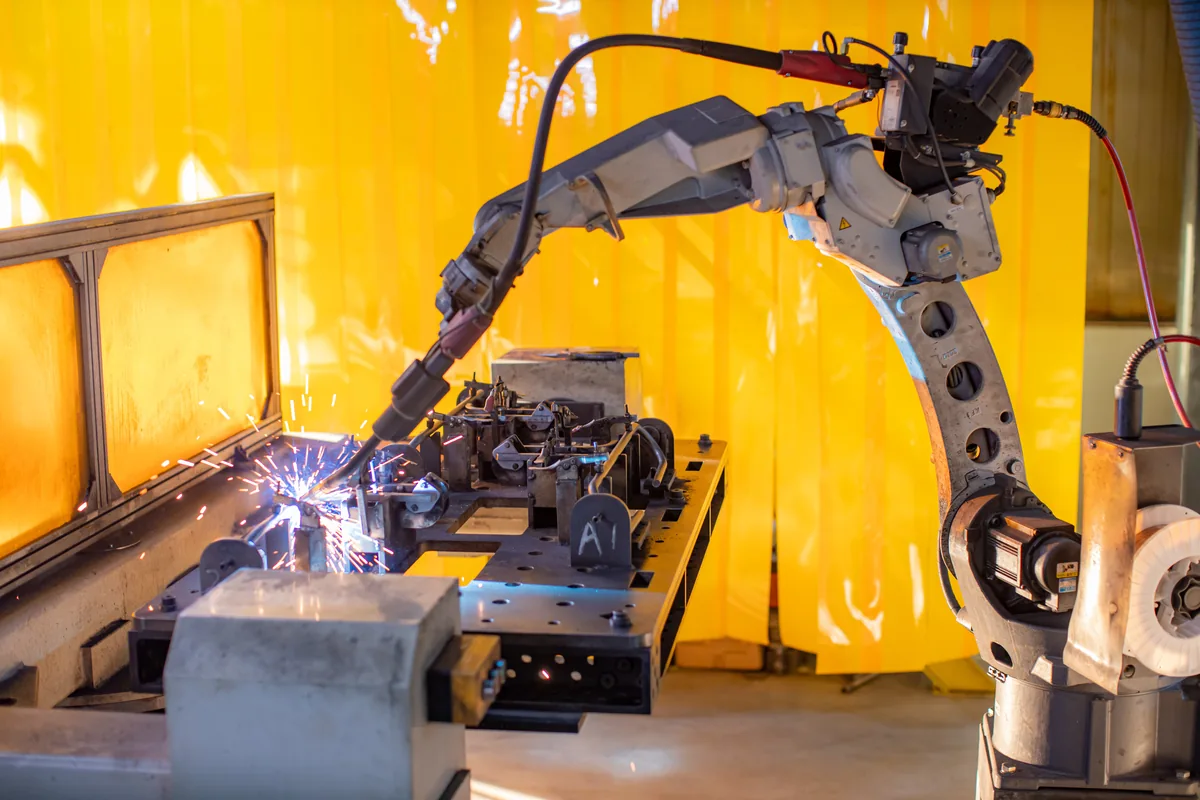
After cutting and forming, joining brings the pieces into a single structure.
- Weldingfuses metal with heat and, done properly, gives a stronger bond than most alternatives.
- Rivetingoffers a quick, low cost mechanical fix that needs little specialist skill.
- Adhesive bondinghides its join lines for a clean finish, though it tends to sit behind welding and fasteners on raw mechanical strength.
Quick Reference: Cutting, Forming and Joining Techniques
| Category | Technique | What it does |
|---|---|---|
| Cutting | Laser cutting | Fast, tight outlines on thin to medium sheet |
| Cutting | Waterjet cutting | Cold cutting for heat sensitive metals |
| Cutting | Plasma cutting | Wide metal range, good on thicker plate |
| Cutting | Punching | Holes, slots and repeat patterns at volume |
| Forming | Air bending | Flexible angles from a single tool set |
| Forming | Bottoming | Consistent, repeatable bend angles |
| Forming | Coining | Sharp, tightly held bends for fine detail |
| Joining | Welding | Strong fused joints |
| Joining | Riveting | Quick, low cost mechanical fastening |
| Joining | Adhesive bonding | Clean, hidden join lines |
Metal Materials Used for Sheet Metal Fabrication
IMAGE ROW: METAL MATERIALS - TEXT LEFT / IMAGE RIGHTMaterial choiceis important early on. The metal you choose dictates the strength, weight, finish and cost of the part.
Carbon steelis the workhorse. It's strong, it's affordable, and it holds up to heavy duty jobs, though you'll want a finish on it to keep rust away. Mild carbon steels are the most common choice, though a range of alloys is available at varying strengths and costs. Within carbon steel, there are two forms to know.
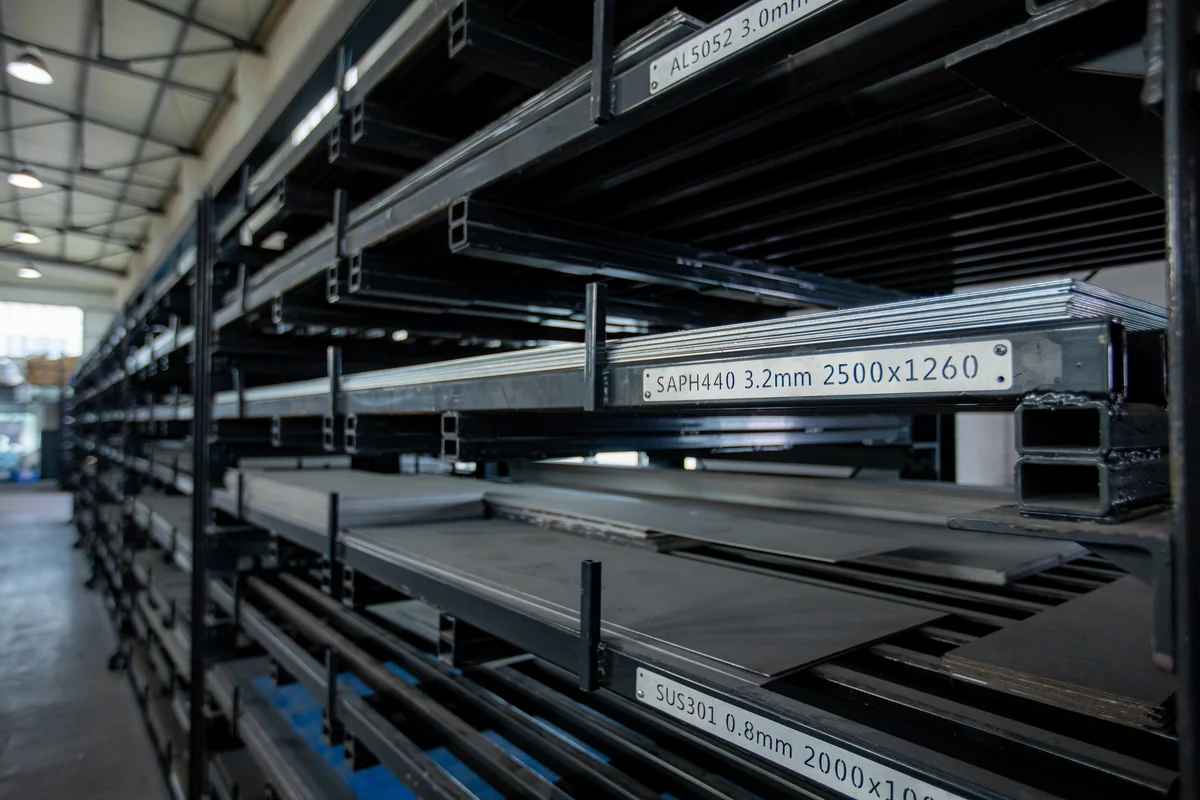
- Hot rolledcomes off the mill with a rougher surface and looser dimensional tolerances, but without the internal stresses that cold working introduces, which makes it a sensible pick where cost beats appearance.
- Cold rolledgoes a step further for a smoother face, closer tolerances and a little extra strength, so it earns the visible parts.
Galvanized steel has a coating of zinc, which keeps the moisture and oxygen away from the base metal, giving it a longer life without treatment. But it is not as corrosion-resistant as stainless steel.
Stainless steelis highly resistant to rust and corrosion thanks to its chromium content, which makes it a safe choice outdoors and in wet conditions, though resistance varies by grade.
Aluminumearns its place when weight matters. Aerospace and automotive teams reach for it because it stays light while keeping useful strength, and its natural oxide layer gives it decent corrosion resistance even without a coating.
Tools and Equipment Used in Sheet Metal Fabrication
A fabricator draws on a broad kit to move metal from sheet to product. The design of the part decides which tools come out.
Tools and Equipment by Process Family
| Category | Tool | Use |
|---|---|---|
| Cutting | Laser cutter | Melts or vaporizes a clean, accurate cut line |
| Cutting | Waterjet | High pressure water and abrasive, no heat distortion |
| Cutting | Plasma cutter | Ionized gas cuts conductive metals fast |
| Cutting | Shearing machine | Straight line cuts with a clean edge |
| Forming | Press brake | Clamps and bends sheet between punch and die |
| Forming | Rolling equipment | Curves and shapes the metal |
| Forming | Stamping press | Presses patterns and shapes with dies |
| Forming | Deep drawing press | Stretches sheet into deep, hollow forms |
| Joining | Welding gear | Fuses parts together |
| Joining | Rivet guns | Joins sheets without heat |
| Joining | Brazing tools | Joins metals with a melted filler metal |
Design Considerations That Keep Parts Affordable
Good design sits behind every part that comes out right the first time. A few factors carry most of the weight.
Material selection should follow the job, the conditions the part will face and what the shop can actually produce. Tolerance matters just as much, since every method holds a different range. Recognized standards such asISO 2768define general tolerances for linear and angular dimensions, and they are widely applied to sheet metal parts, which gives the designer and the shop a shared reference. A design that asks for tighter tolerances than the process can hold runs into scrap and added cost.
As a rough guide, here is what the common processes typically hold. For the full picture, ourGuide to Sheet Metal Tolerancesdigs into the numbers.
Typical Tolerances by Process
| Process | Typical tolerance |
|---|---|
| Laser cutting | ±0.1–0.2 mm |
| Punching | ±0.1–0.2 mm |
| Bending – linear dimensions | ±0.25–0.5 mm |
| Bending – angles | ±0.5–1° |
| General (ISO 2768-m, 6–30 mm dimensions) | ±0.2 mm |
Lining your drawing tolerances up with real fabrication limits saves real time and cost later. Finish, joining method, and overall part detail all feed the price too. Every added bend, hole, or cutout brings a little more labor, so a leaner design usually costs less to make. Design with the shop floor in mind, and you avoid parts that look fine on screen yet fight you in production.
Advantages and Limitations of Sheet Metal Fabrication
The upsides explain its popularity. Sheet metal is versatile, taking on a huge range of shapes and sizes across almost any industry. Done right, the parts are durable and hold tight, repeatable specifications, which makes the process a natural fit for consistent, high-volume production. And because much of the work runs on standard machine tooling, parts often need little or no dedicated tooling of their own, so the process scales down to prototypes just as comfortably.
It has limits worth knowing too. Some parts simply call for a different material or a molded shape. Sheet stock comes in standard gauges, so a design may need to shift to the nearest available thickness. And metal can only be bent so many times, drawn so deep, or cut so fine before it cracks or deforms, so shapes beyond those limits usually point to die casting, forging, or metal injection molding instead. Many parts also need a finishing step before they're ready for service, and highly specialized components can add setup and validation time up front.
Sheet Metal Fabrication Compared With Other Methods
Sheet metal fabrication holds its ground against other manufacturing routes, and each has a sweet spot.
| Method | Strength | Where it fits |
|---|---|---|
| Sheet metal fabrication | Strong, light parts, low or no tooling | Brackets, enclosures, panels, mixed volumes |
| Die casting | Low part cost at very high volume | Mature designs made in huge runs |
| 3D metal printing | Detailed shapes hard to make otherwise | Prototypes and unusual geometries |
| CNC machining | Very accurate detailed components | Small, high accuracy parts |
| Foundry casting | Suits certain bulk shapes | Larger cast forms |
Die casting forces molten metal, usually aluminum, zinc, or magnesium alloys, into a mold under high pressure, which pays off on huge runs of a settled design. The tooling costs a lot and resists changes, though, and cast parts often need machining and finishing afterward to remove flash and clean up the surface. Metal 3D printing shines on detailed one-offs and prototypes, yet its material and process costs climb on larger quantities.
CNC machining delivers superb accuracy on smaller detailed parts, since it cuts material away in fine passes, which pushes its price above sheet work on bigger jobs. Foundry casting melts and pours metal into molds, useful for particular shapes but heavier on time and resources than working a sheet.
Surface Finishing and Post-Processing
IMAGE ROW: SURFACE FINISHING - IMAGE LEFT / TEXT RIGHT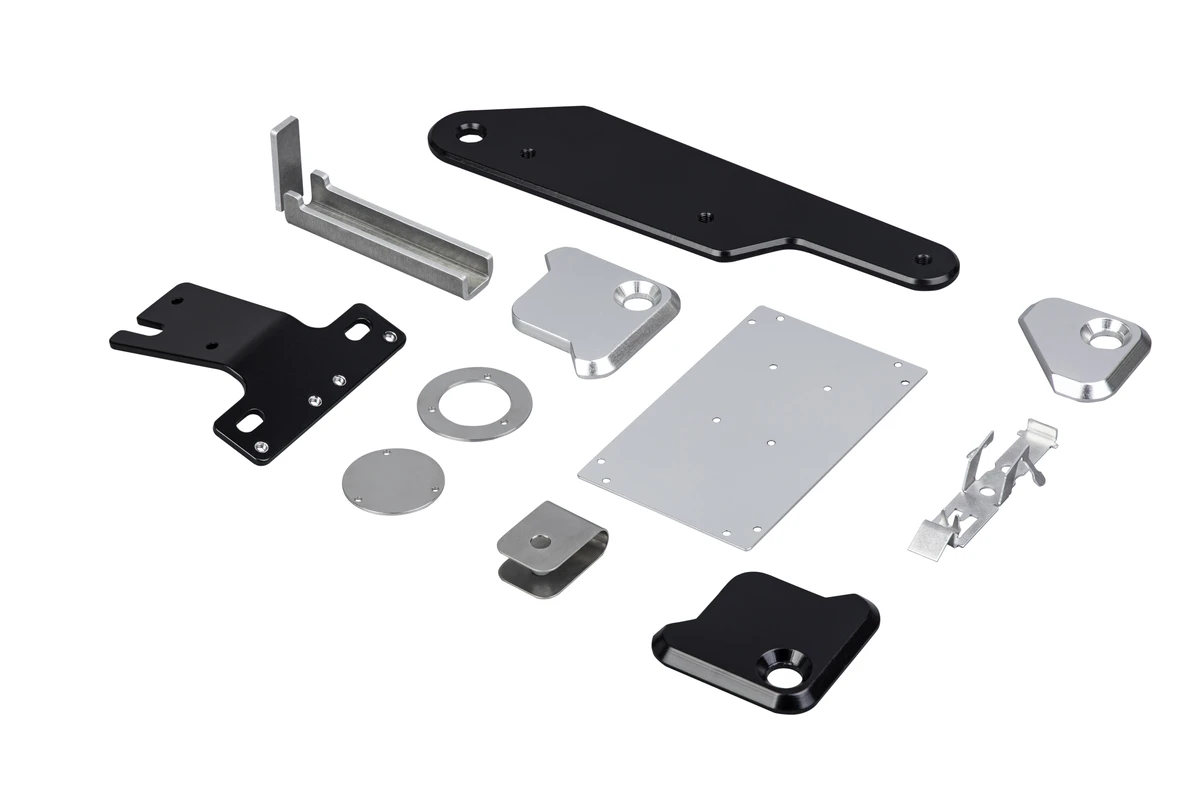
Surface finishinglifts both the durability and the look of a sheet metal part, and a shop will match the treatment to the job.
- Sandblastingleaves a clean matte face.
- Deburring and brushingremove the sharp edges left by cutting and give the surface a uniform, satin-grain finish.
- Powder coatingbakes on a hard, wear-resistant layer of color.
- Anodizinghardens aluminum surfaces and improves corrosion resistance.
- Chemical filmsadd corrosion resistance while keeping the surface conductive, and they often serve as a base layer under paint.
- Platinglays down a thin coat of another metal for conductivity, protection or shine.
- Painting and heat treatmentround out the options, one for looks and cover, the other for relieving internal stress and firming up hardness.
What Drives the Cost of Sheet Metal Fabrication
A few levers move the final quote, and knowing them helps you design within a budget.
Material type and thickness lead the way, since thicker sheets soak up more cutting and forming time and cost more as raw stock. Design detail comes next, because every extra feature adds labor and machine time.
The techniques a part calls for play their part too, as some processes need specialist gear. Volume also swings the unit price, since a longer run spreads the setup cost across more pieces and lowers the cost per piece.
Where Sheet Metal Fabrication Shows Up
IMAGE ROW: WHERE IT SHOWS UP - TEXT LEFT / IMAGE RIGHTThe sheet metal fabrication sector is a broad-based industry that continues to grow.Precedence Researchvalues the global sheet metal fabrication services market at around USD 23.3 billion in 2026 and expects it to reach roughly USD 34.7 billion by 2035, which shows its ongoing importance to modern manufacturing.
In cars, it shows up as engine parts, exhaust sections, and chassis pieces. Designers get to trim weight there without giving up strength. Aerospace leans on it hard too, airframes, engine components, landing gear, all the places where a part has to be light and strong at once. But most of the sheet metal around you sits in ordinary products: the enclosure on a piece of industrial equipment, the bracket holding a sensor in place, the mounting plate inside a robot, the housing on a control panel.
Boda CTA: SOFT-WASH FULL FRAME (BEFORE FAQ)
Instant DFM Checking
Try Boda's instant quotation tool
Get fast, accurate cost estimates that factor in material and fabrication tolerances, so you can plan, budget, and refine your sheet metal parts with confidence.
Frequently Asked Questions
What is sheet metal fabrication in simple terms?
Sheet metal fabrication is the process of cutting, forming, and joining flat sheets of metal into finished parts and structures. It turns a plain sheet of steel, aluminum, or stainless into brackets, enclosures, and panels.
What are the main types of sheet metal fabrication?
The types of sheet metal fabrication fall into three groups: cutting, forming, and joining. Cutting shapes the outline, forming bends the sheet, and joining fixes the pieces into one assembly.
What does the sheet metal fabrication process involve?
The process of sheet metal fabrication includes cutting, forming, joining, and finishing. Each stage prepares the next, beginning with a flat blank and ending with a coated, ready-to-use part.
Which sheet metal fabrication techniques give the tightest tolerances?
Laser cutting and CNC punching hold the tightest tolerances among the common sheet metal fabrication techniques, typically within a few tenths of a millimeter. Bending tolerances run naturally looser, though coining produces the most precise, repeatable bends. For tight features at high volume, hard-tooled stamping takes precision further.
How does sheet metal fabrication compare with CNC machining?
Sheet metal fabrication starts with a sheet of material that is cut and bent to shape. This keeps parts lightweight and tooling costs low. CNC machining is more precise and costly. It involves cutting a part from solid stock. CNC machining is best used for smaller, detailed components.
How much does sheet metal fabrication cost?
The cost depends upon the material and the thickness, the detail in the design, the methods employed and the quantity ordered. Larger runs reduce the cost per part as the setup is amortized over more pieces.