
- Key Takeaways
- What Size Parts Can Boda Turn?
- Which Materials Can Boda Turn?
- What Types of Parts Are Made by CNC Turning?
- Designing a Part That Turns Cleanly
- What Tolerances Can Boda Hold on Turned Parts?
- What Surface Finishes Are Available for Turned Parts?
- When Turning Is the Right Process
- What to Check Before You Send a Turning RFQ
- FAQs
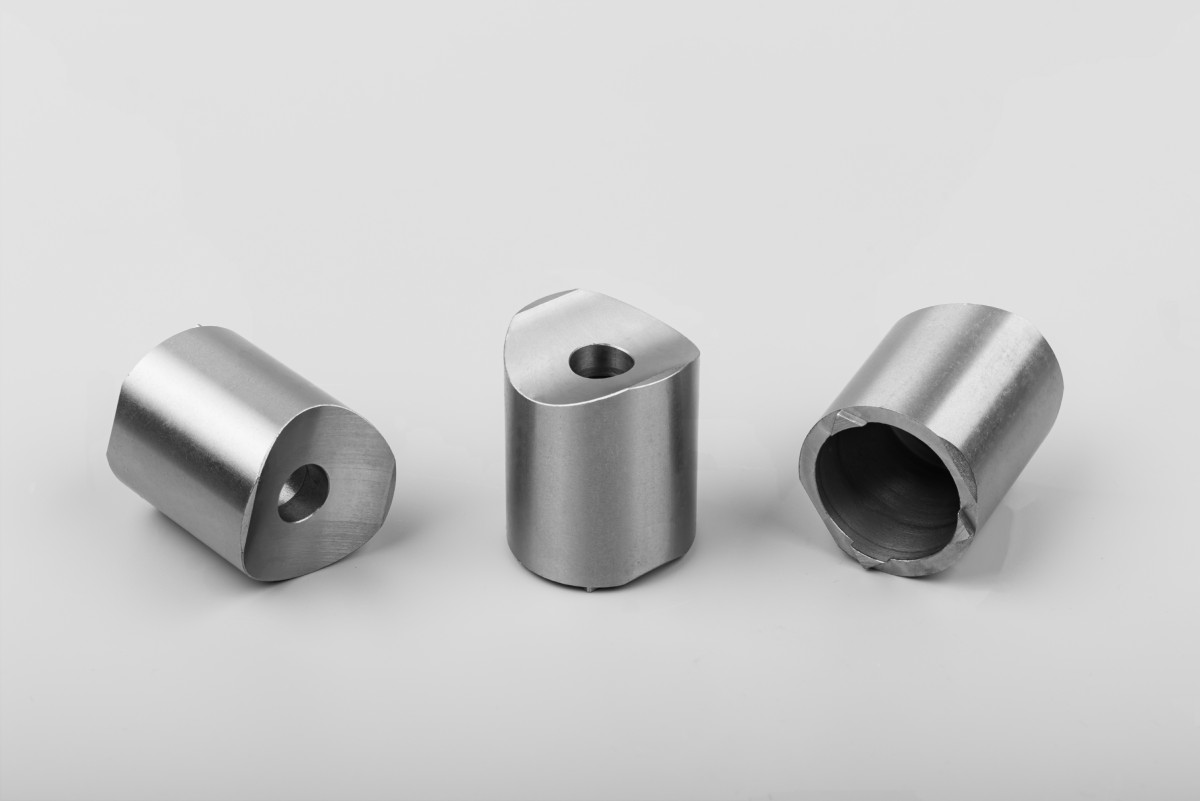
CNC turning makes parts whose main geometry is a revolved profile: shafts, bushings, pins, spacers, flanges, couplings and threaded fittings. If a part can start as bar or tube stock and its critical features share one axis of rotation, turning is usually the cheapest way to cut it. Boda turns parts from 7 to 295 mm in diameter and 10 to 565 mm long, in nine metal grades.
The process is straightforward. The workpiece spins in the chuck while a cutting tool moves along and across the axis of rotation, removing material until what is left matches the profile in your CAD file. We cover the mechanics inWhat Is CNC Turning?. What follows here is the practical side: what actually fits, in which materials, to what tolerance, and with which finishes.
KEY TAKEAWAYS: KMC GREEN CHECKLIST CARDKey Takeaways
Boda turns parts from 7 to 295 mm in diameter and 10 to 565 mm long, across nine metal grades.
Turning suits parts whose critical features share one axis of rotation — shafts, bushings, pins, spacers, flanges, couplings and threaded fittings.
Turned parts are quoted to ISO 2768, with linear tolerances from ±0.05 mm in the fine class to ±2.0 mm in the coarse class, depending on nominal length.
Four surface roughness grades are available, from ≤6.0 µm Ra as-turned up to ≤0.8 µm Ra for bearing fits and seal seats.
Live tooling lets drilling, tapping and knurling happen in the same cycle as the turning, without a second setup.
Table of Contents
- Key Takeaways
- What Size Parts Can Boda Turn?
- Which Materials Can Boda Turn?
- What Types of Parts Are Made by CNC Turning?
- Designing a Part That Turns Cleanly
- What Tolerances Can Boda Hold on Turned Parts?
- What Surface Finishes Are Available for Turned Parts?
- When Turning Is the Right Process
- What to Check Before You Send a Turning RFQ
- FAQs
What Size Parts Can Boda Turn?
Check the envelope before anything else. It rules out more parts than any other constraint.
Boda CNC Turning Size Limits
| Parameter | Limit |
|---|---|
| Diameter | 7 – 295 mm |
| Length | 10 – 565 mm |
| Minimum wall thickness | 2 mm |
| Minimum hole diameter | 3 mm |
| Maximum hole depth | 80 mm, or through |
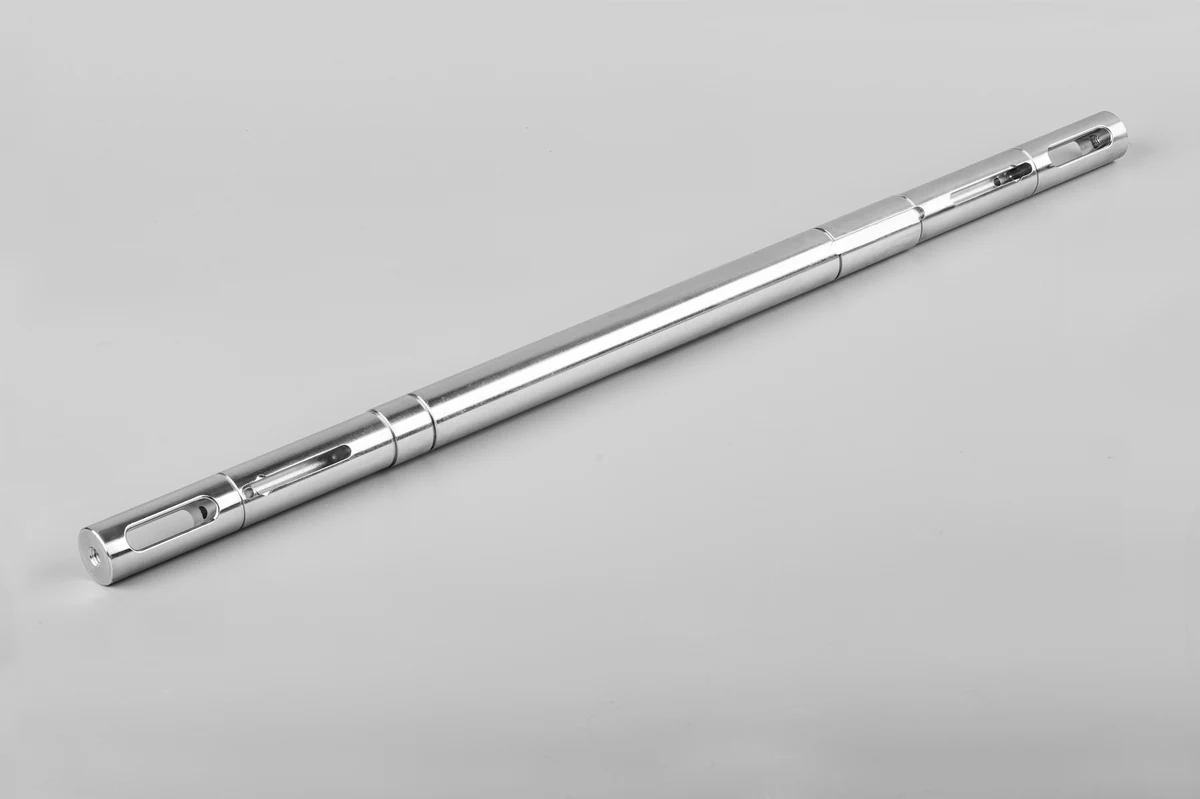
Above limits hold across every surface finish we offer, so a powder-coated part has the same envelope as a mill-finish one. If your part sits close to a limit,upload it anyway— the quoting engine checks the geometry and returns an error report before you commit to anything.
Which Materials Can Boda Turn?
Nine grades run on the turning cell:
CNC Turning Material Grades
| Family | Grades | Applications |
|---|---|---|
| Hot rolled steel | #20, Q235, Q275, Q355 | General machined parts, threaded components, pins and rod ends where corrosion resistance is not required |
| Aluminum | AL6061 T6, AL7075 T6 | 6061 for general turned parts and anodized finishes; 7075 where you need the higher yield at the same weight |
| Stainless steel | SS304, SS316, SS316L | 304 for general corrosion resistance; 316 and 316L for chloride exposure and marine or process environments |
One grade is worth calling out. #20 is a turning-only material — we do not stock it as sheet, so it appears on turned parts and nowhere else. Yield, tensile and hardness figures for every grade are on thematerials page. If you are choosing between grades, we have written separately oncarbon steel selection,aluminum selectionand304 vs 316 stainless.
Plastics are not part of the turning offer. If your part needs acetal or PEEK, this is not the process for it.
What Types of Parts Are Made by CNC Turning?
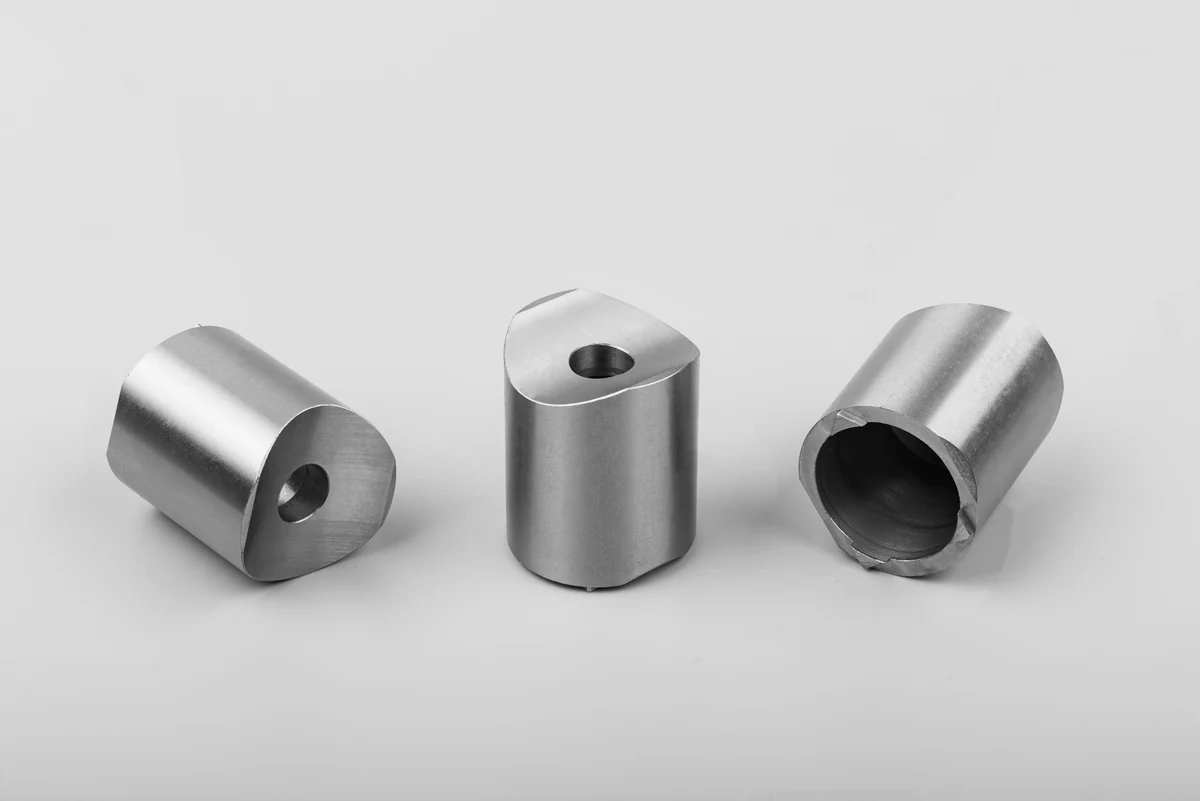
IMAGE ROW: PART TYPES INTRO - TEXT LEFT / IMAGE RIGHTTurning suits any component whose defining features are symmetrical around a central axis. The part can carry asymmetrical detail, but the overall body has to be a revolved shape, because the workpiece is what spins. Here is where those parts show up:
CNC Turning Applications Across Industries
| Industry | Typical turned parts | Grades we run | Why turning works |
|---|---|---|---|
| Aerospace | Bushings, spacers, hydraulic fittings, pins | AL7075 T6, SS316 | Repeatable bore fits and concentricity on revolved features |
| Automotive | Pulleys, bushings, spacers, threaded fittings | Q235, Q355, AL6061 T6 | Short cycle times straight from bar stock at volume |
| Electronics | Connectors, terminals, contact pins, standoffs | SS304, AL6061 T6 | Small-diameter repeatability down to 7 mm |
| Oil & gas | Valve stems, couplings, fittings | SS316, SS316L, Q355 | Corrosion resistance and thread integrity in one operation |
| Medical | Instrument components, fittings, handles, housings | SS304, SS316L | Repeatable fits on small stainless parts; 316L passivates cleanly |
| Marine | Bushings, valve stems, fasteners | SS316L | 316L holds up to chloride exposure |
| Energy | Bushings, terminals, short shafts | Q355, SS316 | Concentricity on rotating assemblies |
| Construction | Bolts, nuts, hinge pins, threaded rod ends | Q235, #20 | Threading and forming in the same cycle |
| Consumer goods | Knobs, handles, faucet components | AL6061 T6, SS304 | Anodized or passivated finish direct from the turning cell |
| Industrial | Bushings, rollers, couplings, spacers | #20, Q235 | Low setup cost across small and mid batches |
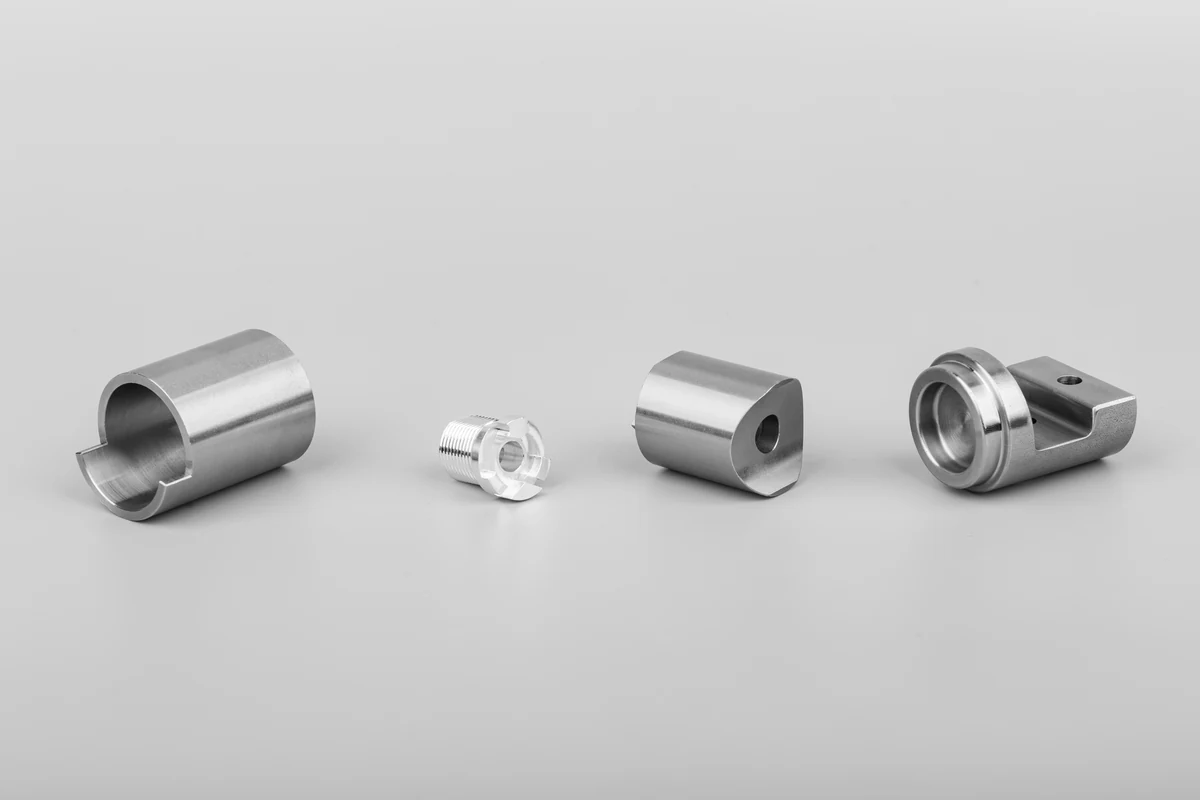
Across all of those industries the same handful of shapes keep coming back. Grouped by what the geometry actually does:
- Bearing and alignment parts— bushings, spacers, pins, dowels, rings. Uniform outer diameter, concentric bore, consistent surface finish.
- Power transmission— shafts, axles, hubs, couplings, pulleys, rollers. Keyways, shoulders and concentricity that has to hold at speed.
- Connection and sealing— flanges, adapters, valve stems, nozzles, cylindrical housings. Bolt-hole position, thread integrity and sealing surfaces do the work.
- Threaded parts— bolts, screws, studs, threaded rod ends. Thread form and shank diameter are what the part is judged on.
Designing a Part That Turns Cleanly
Most turned parts that get flagged during a design review fail on the envelope in Table 1. Two of those limits cause more trouble than the rest.
Wall thickness under 2 mm.Thin walls deflect under tool pressure and the part loses roundness as soon as it comes off the chuck. The dimension you measured in the machine is not the dimension you get.
Holes under 3 mm, or deeper than 80 mm.Small deep bores create a chip evacuation problem. The swarf has nowhere to go, the tool loads up, and finish and tool life both suffer.
Two more things are worth getting right before you send a drawing, and neither shows up as a hard limit.
IMAGE ROW: INTERNAL CORNERS - TEXT LEFT / IMAGE RIGHTInternal corners on a turned profile carry the radius of the tool nose that cuts them. If your drawing calls for a sharp internal corner, that is a secondary operation and a separate line item, so specify it only where it genuinely matters to the function.
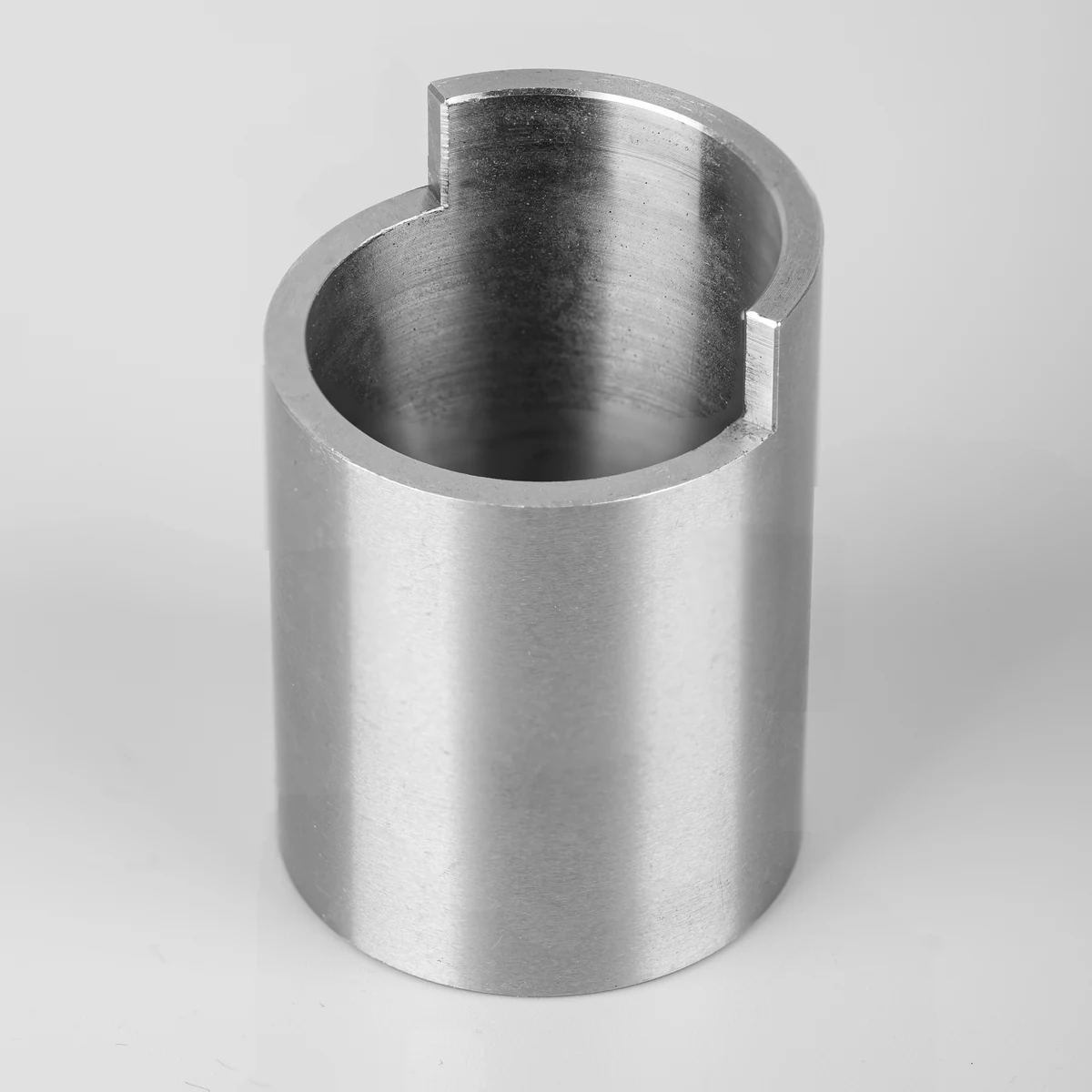
Thread callouts deserve the same care. Use standard forms — ISO metric to ISO 965-1, or UNC and UNF to ASME B1.1 — and state the fit class: 6H and 6g for metric, 2A and 2B for unified. A thread with no specified class is a thread we have to come back to you about, and that is a day added to your lead time for no reason. OurCNC machining drawing guidelinescover the rest of the callout conventions.
What Tolerances Can Boda Hold on Turned Parts?
We quote turned parts to ISO 2768. Permissible deviations by nominal length:
ISO 2768 Linear Tolerance Classes for CNC Turned Parts
| Nominal length (mm) | f (fine) | m (medium) | c (coarse) |
|---|---|---|---|
| 0.5 up to 3 | ±0.05 | ±0.1 | ±0.2 |
| over 3 up to 6 | ±0.05 | ±0.1 | ±0.3 |
| over 6 up to 30 | ±0.10 | ±0.2 | ±0.5 |
| over 30 up to 120 | ±0.15 | ±0.3 | ±0.8 |
| over 120 up to 400 | ±0.20 | ±0.5 | ±1.2 |
| over 400 up to 1000 | ±0.30 | ±0.8 | ±2.0 |
Two considerations do not show up in that table.
First, what is achievable depends on diameter, material and feature type, not just nominal length. A band that is routine on a 20 mm boss in AL6061 behaves differently on a 250 mm diameter in SS316L.
Second, going tighter is never free. Every step toward the fine column adds inspection time and scrap risk, and both land in your unit price. Specify the class each feature actually needs instead of applying the tightest one across the whole drawing. Our note onwhat drives CNC machining costgoes into where that money goes. Full process tolerances across our capabilities are on theprocess tolerances page.
What Surface Finishes Are Available for Turned Parts?
Four surface roughness grades are available on stainless steel, carbon steel and aluminum:
Surface Roughness Grades for CNC Turned Parts
| Grade | Roughness | Typical use |
|---|---|---|
| As turned | ≤ 6.0 µm Ra | Internal parts, or anything going on for further processing |
| Standard | ≤ 3.2 µm Ra | General machined surfaces |
| Fine | ≤ 1.6 µm Ra | Sliding and sealing surfaces |
| High grade | ≤ 0.8 µm Ra | Bearing fits, seal seats, anywhere finish drives function |
If you are not sure which grade a surface needs, ourguide to CNC machining surface roughnesswalks through how Ra values map to function.
Which coating you can apply depends on the base metal:
Coating Options for CNC Turned Parts
| Finish | Available on | Thickness | Salt spray (NSS) |
|---|---|---|---|
| Powder coating | Carbon steel, stainless, aluminum | 70–150 µm | 96–1000 h |
| E-coating | Carbon steel, stainless | 10–25 µm | ≥ 96 h |
| Zinc plating | Carbon steel | 5–25 µm | 48–96 h |
| Passivation | Stainless | — | — |
| Anodizing | Aluminum | — | — |
| Antirust oiling | Carbon steel | — | — |
| Mill finish (none) | Stainless, aluminum | — | — |
Brushed finishing is not available on turned parts — that is a sheet metal option only. If corrosion performance is what you are buying, powder coating is the only finish here that reaches the top of the salt spray range, and where a given part lands inside that 96 to 1000 hour band depends on the specification you ask for. Full details of each process are on thesurface finishing page.
When Turning Is the Right Process
Three questions settle it.
Does the part revolve?Rotational symmetry is the whole basis of the process. Shafts, cylinders and discs come off a lathe more accurately and more cheaply than they come off anything else, because the geometry and the machine motion are the same shape. Asymmetric features are fine; an asymmetric body is not.
Can it start as bar or tube?Bar stock aligns naturally with the rotation of the lathe, which keeps material waste and setup time low. A part that would have to be machined out of a block loses that advantage immediately.
IMAGE ROW: PRODUCTION VOLUME - IMAGE LEFT / TEXT RIGHT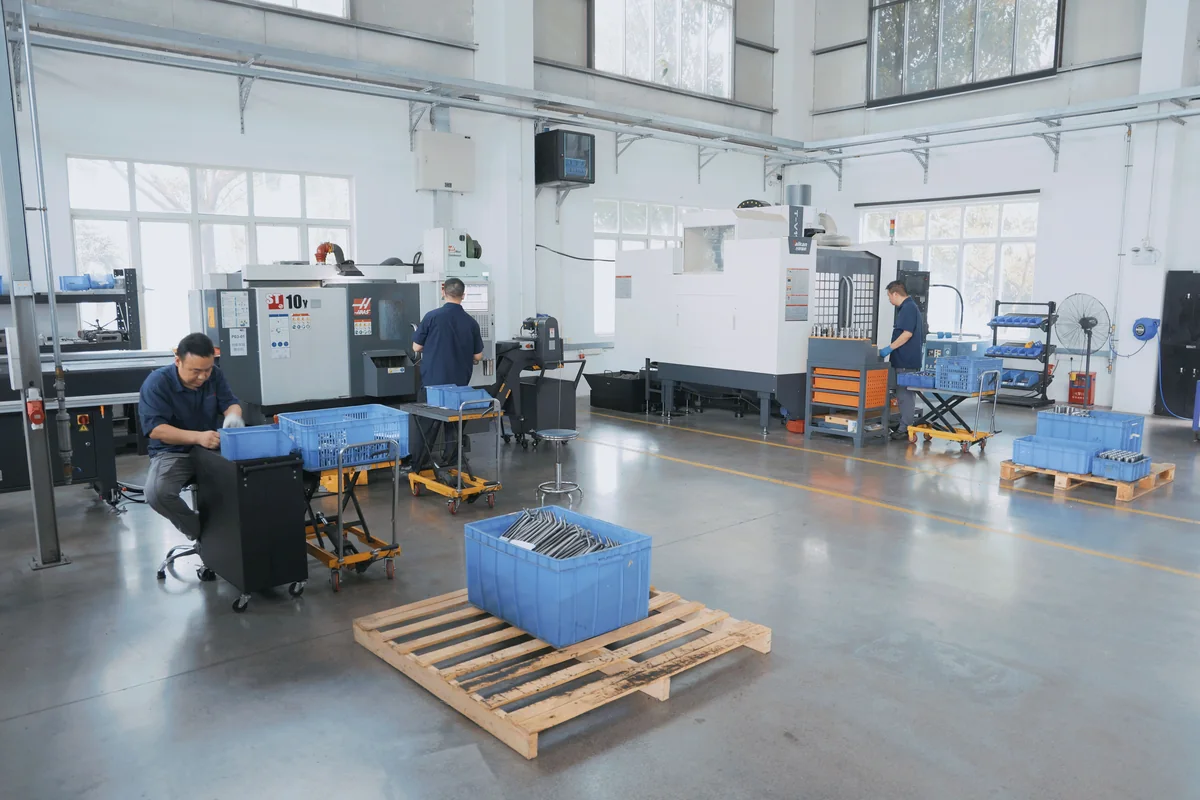
How many do you need?Turning has low setup cost and short cycle times, so it stays competitive from a single prototype up through production volume. Milling is the more flexible process for complex one-off geometry, but on cylindrical parts it cannot match turning on throughput. We compare the two directly inCNC milling vs CNC turning.
One thing that surprises people: live tooling means drilling, tapping and knurling can happen in the same cycle as the turning, without a second setup or a transfer to another machine. That is where a lot of the cost and lead time advantage actually comes from, and it is also why a turned part can carry flats, cross-holes andthreadswithout stopping being a turned part.
What to Check Before You Send a Turning RFQ
Five things decide whether a turned part quotes cleanly:
- It fits within 7–295 mm diameter and 10–565 mm length.
- Its critical features share one axis of rotation.
- The material is one of the nine grades above.
- The tolerance class is called out per feature, not as a blanket class across the whole drawing.
- You have a 3D file in .stp, .step or .sldprt format.
Upload the file andBoda prices it in seconds, with manufacturability feedback before you commit — an error report, a feature summary and part weight. Orders run from a single unit upward, so a one-off prototype is as valid as a production batch.
No 3D model yet? Our engineering team will build one from your 2D or PDF drawing for a flat $15 per drawing, turned around in five working days. Details are on the3D CAD drafting page.
Boda CTA: SOFT-WASH FULL FRAME (BEFORE FAQ)Instant DFM Checking
Try Boda's instant quotation tool
Upload your 3D turning file and get a price in seconds, with manufacturability feedback before you commit — no sales call required.
FAQs
What materials can Boda use for CNC turning?
Boda turns nine metal grades: #20, Q235, Q275 and Q355 hot rolled steel; AL6061 T6 and AL7075 T6 aluminum; and SS304, SS316 and SS316L stainless steel. #20 is available for turning only, not as sheet. CNC turning as a process can also handle brass, copper, titanium and engineering plastics such as nylon and acetal, but those are not part of the Boda turning offer.
How does CNC turning compare to CNC milling?
Both are subtractive processes driven by computer numerical control. The difference is which part moves: in turning the workpiece rotates while the cutting tool stays fixed, and in milling the cutting tool rotates while the workpiece stays fixed. Milling handles a wider range of geometry; turning is faster and cheaper on anything cylindrical.
Can CNC turning produce parts with non-cylindrical features?
Yes. Turning centers with live tooling can drill, mill and thread during the turning cycle, which allows grooves, slots, flats, cross-holes and angled surfaces on a part whose body is still a revolved profile. The overall shape has to stay symmetrical about the axis of rotation, but the detail on it does not.
What tolerances can Boda hold on turned parts?
Turned parts are quoted to ISO 2768, with linear tolerances from ±0.05 mm on small features in the fine class up to ±2.0 mm in the coarse class at the largest nominal lengths. See Table 4 for the full breakdown by nominal length. What is achievable on a specific feature also depends on diameter, material and feature type, and tighter classes carry more inspection time and scrap risk, so specify per feature rather than across the whole drawing.
What are the advantages of CNC turning over manual turning?
Repeatability is the main one. A CNC lathe reproduces the same dimensions across a batch without depending on operator skill, and it can run continuously without intervention. Manual turning remains useful for one-off repair work; for anything you need more than once to a specified tolerance, CNC wins on consistency and unit cost.
How does CNC turning reduce material waste?
Cutting depth and tool path are both controlled precisely, so the process removes only what the geometry requires. Starting from bar or tube stock sized close to the finished diameter also matters: the closer the stock is to the final part, the less material ends up as swarf.
How does CNC turning handle parts of different complexity?
Simple parts needing outer diameters, inner bores and facing operations run on standard turning tooling. More complex parts use live tooling, sub-spindles and multi-axis capability to add drilling, milling, tapping and thread cutting on the same machine, which avoids a second setup and the tolerance stack-up that comes with it.
What should be considered when selecting cutting tools for CNC turning?
Tool material and coating follow the workpiece material, with carbide, cermet and high-speed steel the common options. Tool geometry — rake angle, clearance angle, chip breaker design — should match the material and the operation. Inserts with high wear resistance and thermal stability last longer and reduce cost per part, which matters most on long production runs.